


Ideas for Teachers


Building on the Power of Your Ideas


Artist: Jackie Ferrara

Art Work: Covered Walkway, 1993, concrete block pergola

Location: Lehman College, next to the Apex Building at 250 Bedford Park Blvd. West

Grades: 5-6

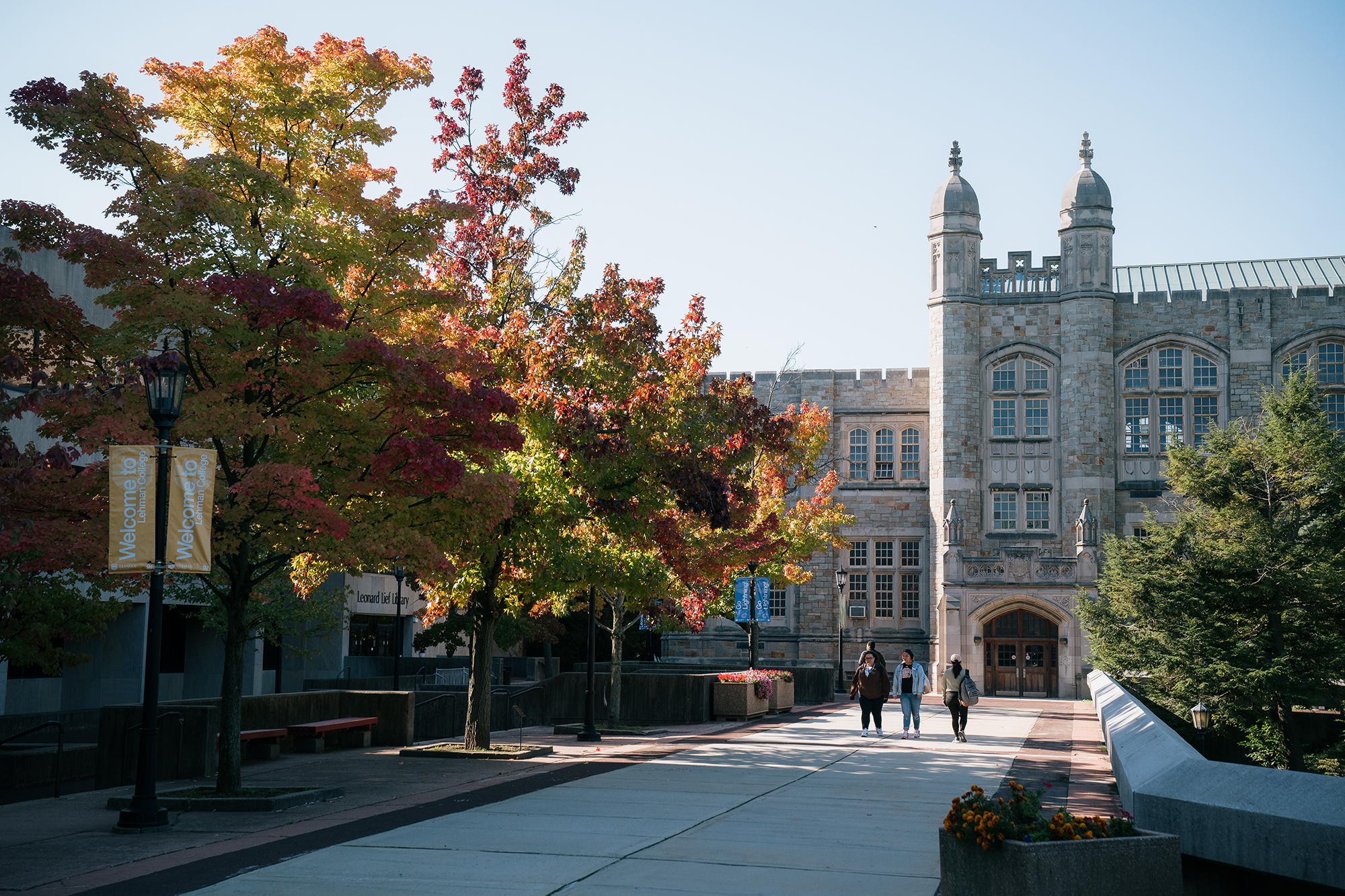
About the Art: The walkway provides an entry portal from the Apex Building to the College Walk, a tree-lined pathway. The design explores the architectural space of a passageway, as we walk through rhythmically spaced openings that create fluttering patterns of light and shadow. Overhead the spacing of the bars increases, framing views of the sky and trees, while the floor of the walkway gently rises. "The viewer becomes part of the piece rather than seeing it as an object," the artist wrote.

Questions for Discussion: What do you see on the outside of the walkway? Where else have you walked through something like this? What do you notice about the pathway after walking through it that you didn't notice from the outside? Why do you think the artist made it from concrete blocks? What do you think the artist wanted you to experience in the pathway? If you were given a commission (paid job) to redesign it, how would you change it?

Sample Art Activity: Students design a model of a walkway for your school.

Purpose: To demonstrate understanding of the relationship of materials to function and of exterior and interior views.

Materials: sketch paper and pencils, ordinary materials such as recycled boxes, craft sticks, construction paper, wood scraps, toothpicks; scissors, glue, string, rubber bands. Cut up recycled grocery cartons into pieces about 6" x 12" for sculpture bases.

Teaching Strategies:

  • During the visit to the Covered Walkway, students make sketches of what they see from at least three different vantage points inside and outside the walkway. Note that the openings frame views of the campus.
  • Ask students questions such as:When you make your model for a walkway, what do you want people to notice? How will you arrange the shapes and spaces so that attention is focused where you want it? Do you want people to keep moving, or stop somewhere along the way? How will you stop them?
  • Students look at sketches before beginning to create the model of their own walkway.
  • Make sure students take care with their choice of materials, colors, textures and patterns, because they all have expressive power. If it is necessary to represent the school itself in some way, they should take care that its proportions are accurate.
  • Starting with the base, build the walkway model. Pieces should be attached together, not loose.
  • Paint with tempera paints.

Closure: Display walkway models at a celebratory event, during which students read their paragraphs about their work (see Extensions below). During whole class reflective discussion, consider, How accurate were you in writing about your work?

Extensions:

For linguistic learning: Students write a paragraph about their own work to express what the model is about. Without reading anyone else’s paragraph, classmates write positive things about one other student’s work. Use a method to ensure random choice such as drawing numbers out of a hat. How expressive was the model—and how sensitive were you to the clues? For social learning: Interview school officials to find out what would be required to create a real walkway for the school, using one of the models produced by students. Report to the class as a whole. What regulations must be followed? Devise a budget for the project. Carry the investigation as far as possible.

National Art Education Learning Standards:

  1. Understanding and applying media, techniques and processes
  2. Using knowledge of structures and functions
  3. Choosing and evaluating a range of subject matter, symbols and ideas
  4. Reflecting upon and assessing the characteristics and merits of their work and the work of others