





News
Search All News
Wednesday, October 28, 2026
Office Hours
Monday - Friday 9am - 5pmClosed Sat. and Sun.
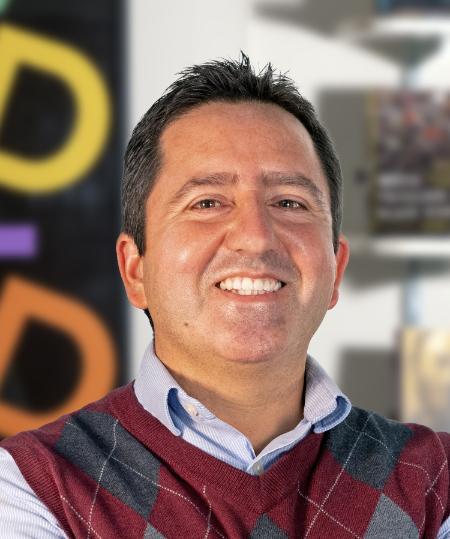

Tom Kurtzman Develops a New Way to Guide Drug Discovery

September 16, 2026
Tom Kurtzman, professor of chemistry at Lehman College and the CUNY Graduate Center, and his colleague Michael Gilson at U.C. San Diego have developed a new theory and computational method that allows drug discovery scientists to visualize which configurations of molecules form the most effective therapeutic compounds. Their article on the method, "A Generalized Theory for the Structural and Spatial Mapping of Energy, Entropy, and Free Energy," will be published in an upcoming issue of The Journal of Physical Chemistry.
Proteins are the machinery of the cell, and almost every medicine works by targeting, binding to, and modulating a particular protein that drives a disease process, such as inflammation, high blood pressure, or tumor growth. The tighter the chemical bond, the more effective the drug may be at changing that protein’s behavior, and this largely determines the potency of the drug.
The new theory, called Generalized Thermodynamic Mapping, or GTM, improves on the current method in drug development that uses computer simulations to predict the strength of those chemical bonds. Before Kurtzman developed GTM, these predictions could model a better chemical bond but offer little guidance on what tweaks would create it.
GTM breaks down the prediction atom by atom, enabling visualizations that illustrate which parts of a molecule bind to a protein, which parts impede binding, and which parts are open for redesign. This cuts short the long process of trial and error by showing a drug discovery scientist what changes to make to a lead molecule, where on the molecule to make them, and why those changes should help.