


News
Search All News
Wednesday, February 25, 2026
Office Hours
Monday - Friday 9am - 5pmClosed Sat. and Sun.
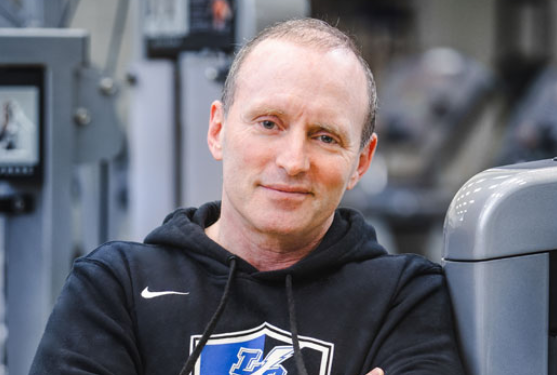

What Bryan Warde Did on His Vacation: Visit Every Country in the World
With his visit to Guinea-Bissau, Bryan Warde ended an odyssey that took him to all 193 UN member states, Kosovo, Taiwan, the Holy See, Palestine, and other non-member nations, territories, and states.
February 25, 2026
Professor of Social Work Bryan Warde turned a lifelong curiosity about the wider world into an ambitious personal mission: to see every one of the 193 member countries of the United Nations. He didn’t set out with a checklist—initially he was driven by a simple desire to discover new places—but well into his 40-year travel odyssey, curiosity evolved into a clear goal. Having recently completed the tour with his visit to Guinea-Bissau, he reflects on how that goal took shape and how decades on the road during his vacation breaks have shaped his perspective on people, place, and belonging. (The interview has been edited for length.)
How did your interest in travel begin, and how did that develop into your plan to “do the 193”?
Growing up in England, my fascination with travel began around age eight through a children’s magazine called Look and Learn. I loved the country profiles and memorized all the world capitals, promising myself I’d see them someday. When I began traveling in 1988, I wasn’t trying to visit every country on the list—I just wanted to see as much of the world as possible. But, over time, meeting people who aimed to see them all made me wonder if I could, too. After 150 countries, chat in Madagascar with a traveler named April motivated me to go for all 193.
What have you learned from other travelers?
Early on, most of the people I met were tourists excited to visit famous European cities. They were impressed by almost everything and treated local people with respect. Later, as I traveled to more remote places, I met more “every country” travelers. Many were genuinely curious and open, but some attitudes bothered me, especially in Africa: people acted entitled, upset about slow WiFi or a hotel not meeting expectations. Worse, some ignored local people, taking photos without asking or giving anything in return—things they probably wouldn’t do at home. It taught me to be mindful, respectful, and ready to adapt.
How have decades of travel changed how you understand yourself—and people here at home?
I’ve realized I’m a people person who enjoys meeting others from different cultures and backgrounds. I never thought of myself as outgoing, but travel made it clear that being sociable is part of who I am. When I meet new people while traveling, I feel alive. I’ve learned to embrace differences, but I’ve also learned how much we share: we all laugh, cry, dream, and get angry—we just do it in different languages. A smile means the same thing everywhere. I try to bring that outlook back to colleagues, students, and everyone I meet. Travel has also shown me how fortunate I am, and it pushes me to help others when I can.
Would you describe a really memorable or surprising experience?
A couple stand out. In Togo and Benin, for the first time I truly saw myself reflected in my travels. I felt at home. People looked like me, and I looked like them, and that sense of belonging was comforting, even though I don’t have roots there. More recently I went to Salvador, Bahia in Brazil, which is one of the most African places I’ve visited outside Africa. I traveled for the first time with other Black men—four African American men and an African Brazilian guide—and felt understood and completely at ease. I surprised myself by realizing how much belonging matters to me.
Many people aren’t able to travel or interested in navigating new places. What else might cultivate the sense of openness and discovery that travel offers?
There are other ways to build the same psychological and emotional strengths. Pick a hobby that pushes you to explore your surroundings and engage with people. I enjoy photography, and there’s so much to notice on the streets of New York. Looking through a camera lens helps you see your environment with interest and thoughtfulness. The “Humans of New York” series is a great example, pairing portraits with the stories of the people photographed. You can do something similar with a smartphone. Whatever it is, start with curiosity.