






Glossary
Contact
-
Art Gallery
Email
718-960-8731
Fine Arts Building, Room M6Office Hours
Tuesday-Saturday, 10:00 AM – 4:00 PM
Related Links
abacus: The flat plate on the top of a capital on which the architrave rests.
acroteria: Decorative pedestal for an ornament or statue placed atop the pediment.
adobe: Often used to describe an architectural style; adobe is actually a building material made with tightly compacted earth, clay, and straw.
aisle: The portion of a church flanking the nave and separated from it by a row of columns or piers. In general, the space between the arcade and an outer wall.
American Renaissance: In the history of American architecture and the arts, the period ca 1876 - 1914 characterized by renewed national self-confidence and a feeling that the United States was the heir to Greek democracy, Roman law, and Renaissance humanism.
antebellum: Latin for “before war.” Refers to elegant plantation homes built in the American South before the Civil War.
ante fixes: small decorative fixtures put at the eaves of a roof of a classic building to hide the ends of the tiles.
apron: The lower part of a molded cornice.
apse: In a church, a semicircular or polygonal projection at the altar (usually east) end, beyond the sanctuary.
arcade: A series of arches supported by piers or columns.
arch: A structure, especially one of masonry, forming the curved, pointed, or flat upper edge of an open space and supporting the weight above it, as in a bridge or doorway.
architrave: A horizontal beam or lintel, that rests on columns or piers; or the lowest portion of an entablature; or a decorative molding around a door, a window, or an arch.
archivolt: Bands or moldings surrounding an arched opening.
armature: A framework serving as a supporting core.
Art Deco: The Art Deco style evolved from many sources. The austere shapes of the Bauhaus School and streamlined styling of modern technology combined with patterns and icons taken from the Far East, ancient Greece and Rome, Africa, Egypt, India, and Mayan and Aztec cultures. Building often styled with zigzag patterns and vertical lines that create dramatic effects.
Art Moderne: Stripped-down forms and geometric designs, the Art Moderne style appears sleek and plain. Features are asymmetrical, horizontal orientation, flat roof,
no cornices or eaves, cube-like shape, smooth, white walls, sleek, streamlined appearance, and rounded corners highlighted by wraparound windows.
Art Nouveau: Ornate motifs with strong organic curves. Highlights: cross-lined designs, rounded corners and intersecting planes.
Arts & Crafts style: Stylistic design of interior woodwork with minimalistic design and precise craftsmanship. English and Dutch origin.
ashlar: Stone that is cut square. Masonry using thin slabs of squared stone as facing material.
atrium: An inner courtyard that is open to the air. The open central courtyard of an ancient Roman house.
attic story: Refers to a story or low wall above the cornice of a classical façade.
axis: An imaginary line to which elements of a work of art, such as a picture, are referred for measurement or symmetry.
baldachin: Decorated canopy, usually over an altar.
balustrade: A decorative railing composed of post (balusters) and a handrail often used at the front of a parapet or gallery.
bandcourse: A thin projecting course of brickwork or stone; also “stringcourse.”
Baroque: Ornate classical motifs and eccentric mathematic architecture accented with bright colors and gold trim.
barrel roof: Like a covered wagon, or inverted ship; barrel vault is a plain vault of uniform cross section.
bas-relief or low relief: Sculpture in which the carved forms project only slightly from the background.
bastions: 1. Projecting parts of a fortification. 2. Well fortified positions.
battlement: A notched parapet built on top of a wall.
batten board: A small strip of wood used to cover joints.
Bauhaus style: Bauhaus buildings have flat roofs, smooth facades, and cubic shapes. Colors are white, gray, beige, or black. Floor plans are open and furniture is functional. Segmentation of space into modular units showcased in glass, screens and moveable walls.
bay: Compartment or unit of division of an interior or of a facade - usually between one window or pillar and the next.
Bay window: A window or set of windows that project out from a wall, forming an alcove or small space in a room.
Beaux-Arts: Distinguished by its emphasis on the beautiful plan and clear distinction of function. Coupled columns, monumental flights of stairs, figural sculptures, and both Greek and Roman elements are features.
bell-cote: A small shelter for bells; has a gable or shed roof.
belvedere: An open sided structure designed to offer extensive views, normally in a formal garden.
blind arcades: A row of decorative arches that looks like an arcade but is attached to a wall surface and has no real openings.
blind arch: An arch applied to a wall.
bracketed style: A term occasionally used for the Italianate style. An eclectic style of Italian-influenced residential and commercial architecture; fashionable in England and America from the 1840s to around 1890.
blind opening: A term applied to windows, arches, balustrades, etc. that are applied to a wall for decorative purposes but are blocked with recessed stone, brick, etc.
board and batten: Describes a type of exterior siding or interior paneling that has alternating wide boards and narrow wooden strips.
boss: In masonry construction, a projecting ornament, often located at the intersection of two components.
brutalist architecture: Named for “beton brut.” The French term for concrete with an unfinished surface.
bulls-eye window: Oeil-de boeuf means bulls eye—a small circular window.
buttress: A structure built against a wall to support or reinforce it. When the buttress is a free-standing pier attached to the wall by one or more arches, it is called a flying buttress.
calyxes: The outermost group of floral parts.
campanile: Detached bell-tower, most commonly found in Italy.
canopy: An ornamental, roof-like projection or covering.
Cape Cod style: Originated in colonial New England. The first Cape Cod style homes were built by English colonists who came to America in the late 17th century. They modeled their homes after the half-timbered houses of England, but adapted the style to the stormy New England weather. Over the course of a few generations, a modest, one- to one-and-a-half-story house with wooden shutters emerged.
cantilever: A horizontal platform extending from a building, such as a step, balcony, beam or canopy that is without external bracing and appears to be self-supporting.
capital: A decorative form placed at the top of a column.
caryatid: Sculptured female figure serving as a supporting column.
cartouche: An oval tablet with an elaborate scroll-carved frame, used as ornamentation for building moldings, borders, panels, etc.
cast-in-place concrete: Cement mixture that is deposited as plastic concrete, which will harden as part of the structure, as opposed to pre-cast concrete.
casemates: fortified enclosure for artillery on a warship.
casement window: A hinged window that swings open to one side.
castellated: Decorated with battlements or a serrated edge (a wall with indentation and raised portions that alternate; also known as crenellation. Resembling the top of a castle wall.
chair rail: A molding that surrounds a room at chair back height to prevent scuffing and damage to walls.
chancel: The area around the altar of a church for the clergy and choir; often enclosed by a lattice or railing.
chateau: A manor house or residence of the lord of the manor or a country house of nobility or gentry, with or without fortifications, originally - and still most frequently - in French-speaking regions.
clapboard: Similar in appearance to roofing shingles, clapboard is wooden boards that overlap each other on the side of a house.
cladding: A term used to describe the siding or materials covering the exterior of a building.
clerestory: A row of windows located near the top of the wall of a nave of a church or room or other space.
coffer: A decorative panel that is recessed in a ceiling, vault, or dome.
Colonial Revival style: Three major types of Colonial Revival styles are Neo-Georgian, Neo-Adamesque, and Dutch Colonial Revival. Highlights are front door with pediment; double-hung, multi paned windows; classical details; single side-gabled roof.
colonnade: Columns in a row that form an architectural composition, beneath either a flat-topped entablature or a row of arches.
column: A slender, upright structure, usually a supporting member in a building. Usually with a capital at the top and a base at the bottom.
concave: Curving inward.
conical: Having the form of, resembling, or pertaining to a cone.
console: A type of bracket or corbel, particularly one with a scroll-shaped profile.
Continental style: Of or relating to the mainland of Europe; European.
convex: Having a surface that is curved or rounded outward.
coping: Consists of the capping or covering of a wall.
corbel: A decorative device often used for pilasters, mantels, or load bearing shelf support. A bracket of brick or stone that juts out of a wall to support a structure above it.
Corinthian column: A column decorated at the top with curlicues, scrolls, acanthus leaves, and other extravagant ornamentation.
cornice: Decorative ledge along top of wall. The top projecting section of the part of a classical building that is supported by the columns (entablature).
Cotswold Cottage style: With roots in the pastoral Cotswold region of England, the picturesque Cotswold Cottage style is reminiscent of a cozy storybook house. Features include sloping, uneven roof; brick, stone or stucco siding; prominent brick or stone chimney; small dormer windows; low doors and arched doors; and sloping walls in rooms on upper floor.
course: Level layer of stones or bricks.
Craftsman and Bungalow style: Based on the Arts and Crafts movement, the bungalow represented a simple, efficient, house, with a front porch that encouraged outdoor living. Highlights of Craftsman and Bungalow style are: low-pitched gable roof; wide overhands; exposed roof rafters and wood structure; porch; tapered square column supports.
crenellation: A series of gaps in the low wall at the edge of a roof.
cross gabled: Roof having additional sections or wings crossing perpendicular to the main section, meeting in a valley, each with its own peaked or gabled façade.
cross-timbering: A building with exposed wood framing. The spaces between the wooden timbers are filled with plaster, brick, or stone. Used in early building.
crown molding: Where the wall meets the ceiling to hide uneven surfaces and provides visual interest.
cruciform: Shaped like a cross.
cupola: A small dome on a tower or a roof.
curtain wall: A lightweight exterior cladding that is hung on the building structure, usually from floor to floor.
cylindrical: Having the shape of a cylinder, especially of a circular cylinder.
dado: Lower part of an interior wall when paneled or painted separately from the main part.
dentil: A decorative feature in a cornice consisting of a row of small, tooth-like square blocks.
diaper: A pattern formed by small, repeated geometrical motifs set adjacent to one another, used to decorate stone surfaces.
dome: A roof or vault, usually hemispherical in form.
Doric column: A Greek-style column with a smooth or slightly rounded band of wood, stone or plaster as a simple decoration around the top. The simplest of the three classical orders of Greek architecture.
dormer: A window that projects from a sloping roof.
Duranodic: Paint color that is an industry standard.
Dutch Colonial style: A style of American domestic architecture, primarily characterized by gambrel roofs having curved eaves along the length of the house. Central to the style is a broad gambrel roof with flaring eaves that extend over the long sides, resembling a barn in construction. Earlier homes were a single room, with additions added to either end (or short side), and very often a porch along both long sides. Typically, end walls were made of stone and a chimney was located on one or both ends. Common were double-hung sash windows with outward swinging wood casements and a central double Dutch door.
Early Colonial style: Sometimes referred to as "first period". Not really a specific style, but rather the form created by function by the earliest settlers. Typically, most had steep roofs and smaller windows.
eave: The projecting lower edge of a roof.
eaves courses: The lowest course of tiles or slates.
egg and dart molding: Molding in which an egg shape alternates with a dart shape. Classical ornamental design that forms a course of alternating oval shapes and arrows.
Egyptian period: A stepped stone system. Royal tomb pyramids and temples constructed of layered cut stone block or hollowed out rock tombs. Columned or pillared halls, porticos (entryways) and sacred chambers embellished with historical or royal inscriptions and relief sculptures.
elevation: Drawing of an exterior of a structure.
Elizabethan style: The term given to early Renaissance architecture in England, during the reign of Queen Elizabeth I. Stylistically it followed Tudor architecture and was succeeded in the 17th century by Palladian architecture introduced by Inigo Jones. In England the Renaissance tended to manifest itself in large square tall houses (like small castles), often with symmetrical towers which hint at the evolution from medieval fortified architecture.
embrasures: An opening in a wall that frames a doorway or a window that which allows guns to be fired from. Masonry buildings in the Gothic Revival style may have architectural decoration that resembles battlements.
encaustic tiles: Ceramic tiles in which the pattern or figure on the surface is not a product of the glaze but of different colors of clay. They are usually of two colors but a tile may be composed of as many as six. The pattern is inlaid into the body of the tile, so as the tile is worn down the design remains.
engaged (or applied) column: A column that is attached to the wall so that only half of the form projects from the wall.
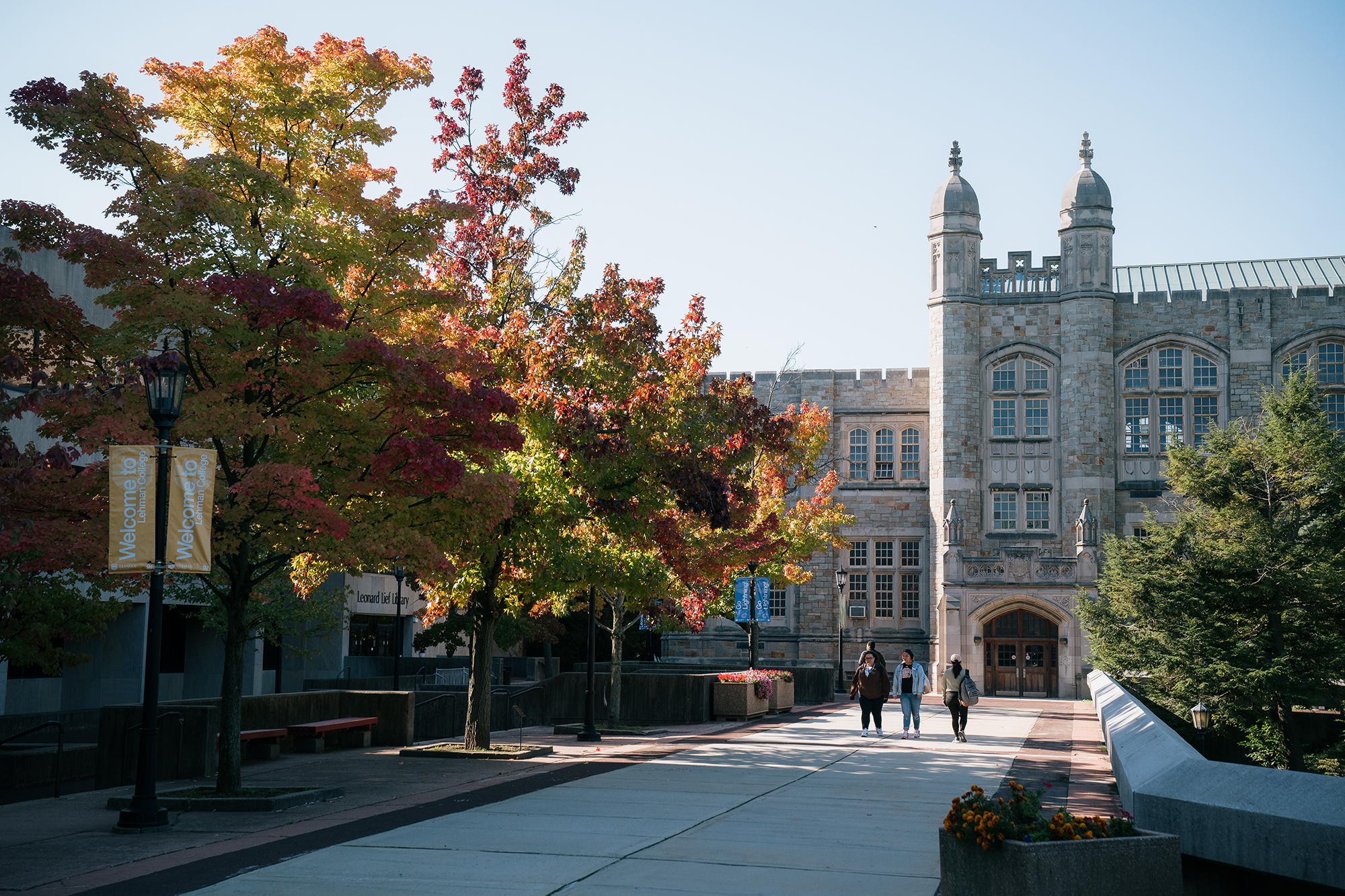
English Collegiate Gothic: Derives from Gothic Revival, an architectural style inspired by medieval Gothic architecture. The Gothic style was promoted by architect Ralph Adams Cram for college campuses of the early 20th century. Features include: asymmetrical front façade; pointed arch doorways; stone lace-like ornamentation; and statuary niches.
entablature: This often decorated, horizontal component lies between the columns and the roof; in classical architecture, the entablature consists of an architrave, a frieze, and a cornice. escutcheon: Shield or shield-shaped surface on which a coat of arms is depicted.
façade: An exterior wall of a building. The principal or front face of a building showing its most prominent architectural features.
fan light: Glazed area above a doorway, designed to brighten the hallway inside. A type of transom.
fan vaulting: A method of vaulting employed in the Perpendicular style, so called because of its resemblance to a fan. The ribs radiate from one point with the same curvature, and are equidistant. The intermediate spaces between the ribs are generally filled in with smaller ribs and with decorative ornaments that sometimes give it the name of ‘fan-tracery’.
Federal / Adam Style: Graceful details distinguish these homes from the pragmatic Georgian colonial style. Highlights include: low pitched roof; smooth façade; semi-circular fanlight over entry door; and geometric forms.
fenestration: The stylistic arrangement of windows in a building.
Flamboyant style: The final development in French Gothic architecture that reached its height in the 15th century. It is characterized chiefly by ornate tracery forms that, by their suggestion of flames, gave the style its name. Flamboyant works exhibit pronounced freedom and exuberance, created by high, attenuated proportions, accumulated and elaborate traceries, and many crockets, pinnacles, and canopied niches.
fleche: A slender spire, especially one on a church above the intersection of the nave and transepts. The word is French for “arrow.”
flute (or fluting): Shallow, concave grooves running vertically on a column, pilaster, or other surface.
Fieldstone: A stone used in its natural shape.
finial: An ornamental projection at the top of a gable, spire, arched structure, or roof.
Fish scale Shingles A shingle having straight sides and rounded bottoms.
floor plan: A simple line drawing showing rooms as if seen from above. Walls, doorways, and windows are often drawn to scale. A complete set of construction plans will also contain many other types of diagrams, such as cross-section drawings, electrical plans, and elevation drawings.
fluting: Shallow, concave grooves running vertically on a column, pilaster, or other surface.
flying buttress: A buttress arched over at the top to engage with a main wall. A principal feature of Gothic architecture, lending strength and solidity to the main structure.
flying stair: Cantilevered from the walls of a stairwell, without newels; sometimes called a Geometric stair when the inner edge describes a curve.
formalism: An emphasis on form and visual relationships between the building parts and the work as a whole. Shape, often on a monumental scale, is the focus of attention. Lines and rigid geometric shapes predominate in Formalist architecture. Formalism found in many Modernist buildings, especially in Bauhaus and International Style architecture.
foundation: The base of a house providing stability.
foyer: The entrance hall or vestibule of a home.
frame: Of wood construction.
French Renaissance: In France in the 16th century Renaissance taste made one of its first tentative appearances in the Louis XII wing of the château of Blois. In the first period Gothic traditions persisted in plan, structure, and exterior masses, onto which fresh and graceful Renaissance details were grafted. Handsome and livable châteaus replaced grim feudal castles.
French Second Empire: An architectural style that was popular during the Victorian era, reaching its zenith between 1865 and 1880. In the United States, the Second Empire style usually combined a rectangular tower, or similar element, with a steep, but short, mansard roof; the roof being the most noteworthy link to the style’s French roots. The mansard roof crest was often topped with an iron trim, sometimes referred to as “cresting”. The exterior style could be expressed in either wood, brick or stone.
frieze: Usually located below crown moldings; refers to a decorative band running along the wall of a room, usually just below the ceiling. A horizontal band forming part of the entablature of a classical building, situated between the architrave and the cornice, and often decorated with sculpted ornaments or figures.
fritted-glass: Tempered glass with a ceramic based paint permanently bonded
onto the glass during the tempering process. front gable: Roof on houses having the peak or gable facing the front.
gable: A gable is the triangle formed by a sloping roof. A building may be front-gabled or side-gabled or cross-gabled.
gambrel roof: A roof that has a double slope. The lower slope is steeper and longer than the upper one.
gargoyle: A spout usually carved in the shape of an animal or demon, and connected to a gutter for throwing rain water from the roof of a building.
gazebo: A small summerhouse or pavilion with a view, or a belvedere on the of a house.
Georgian style: The style of the 18th century, especially from the reign of King George I who ascended the throne in 1711, until the American Revolution (King George III). Georgian was a stately, symmetrical style that dominated in Great Britain and Ireland and influenced building styles in the American colonies. Characterized by its proportion and balance; Georgian designs usually lay within the Classical orders of architecture and employed a decorative vocabulary derived from ancient Rome or Greece. The most common building materials used are brick or stone. Commonly used colors were red, tan, or white. However, modern day Georgian style homes use a variety of colors.
girders: Crossbeams that support floor joists.
Gothic style: Use of pointed arches (not semi-circular or restricted to two arches per vault) and ribbing along the intersections of all arches. High gothic architecture included the use of the flying buttresses that were extensions of ribs from interior vaults to the outside, connecting downward to the floor level to complete the skeletal structure.
Gothic Revival style: An architectural style that began in the 1740s in England characterized by strong associational values of religion and nature. A Victorian style that borrowed details from Gothic cathedrals and other medieval architecture. In the early twentieth century Gothic Revival ideas were applied to modern skyscrapers. Twentieth Century Gothic Revival buildings are often called Neo-Gothic.
Greek style: A post-and-lintel system (roof support design). Colonnade porticos (entry ways) and roof detail including cornice surrounding the pediment on either end of the building length. Interior walls spanning the length of the building segment into rooms and provide roof support. Highlights: columns, capitals, cornices and pediments in a grid system.
Greek Revival style: Highlights include: pediment gable; symmetrical shape; heavy cornice; wide, plain frieze; bold, simple moldings.
groin: A roof with sharp edges at intersection of cross-vaults.
ground plan: A ground plan shows the basic outlined shape of a building and, usually, the outlines of other interior and exterior features.
gutta: From the Latin guttae, “drops”. A small water-repelling, cone-shaped projection used in the architrave of the Doric order in classical architecture.
gutter: A metal or plastic pipe that collects water off the eave.
half-timbered: A building with exposed wood framing. The spaces between the wooden timbers are filled with plaster, brick, or stone. Used in early building.
hammer beams: Right angled support beams projecting from wall tops to brace wooden roofs.
high-relief: Sculpture in which the carved forms project only distinctively higher from the background.
High Victorian Gothic style: Primarily a post-Civil War phenomenon. Highlights are: constructional polychrome; pointed arches; ornamental bricks, terra-cotta tiles; and patterned tile or slate roof.
hip roof: A roof that slopes down to the eaves on all four sides. Hipped roofs are often found on French Inspired and American Foursquare style homes. Although a hipped roof is not gabled, it may have dormers or connecting wings with gables.
hood molding: A projecting molding on the wall above an arch.
International Style: A term often used to describe Bauhaus architecture in the United States. Open expanses characterized by planes made possible through reinforced steel and concrete of the industrial age. Juxtaposition of form with elongated horizontals emphasized as seen in the work of Frank Lloyd Wright’s work.
Ionic column: A Greek-style column topped by a single scroll just below the top.
Italianate style: These homes usually have a lower pitched roof with wide overhanging eaves. Large, decorative brackets are used below the eaves. Typically they have tall, narrow windows, some arched or curved above. Some have a square cupola or tower.
Jacobean Revival style: Victorian revival of the grand, sumptuous style that appeared in the early 1600s. It is typified by Dutch gables, mullioned windows, and ornate stonework.
jamb: The stones forming the side of a door or window.
Jerkin head / short hip roof: a gable roof, truncated or clipped at the apex. joists: Any of the small timbers or metal beams ranged parallel from wall to wall in a structure to support a floor or ceiling.
keystone: Central, wedge-shaped stone of an arch. Called “keystone” because the arch cannot stand up until the keystone is in position.
king-post: The middle post of a truss. Large, heavy screws, used where great strength is required, as in heavy framing or when attaching ironwork to wood.
label molding: A square-arched dripstone or hoodmold; extends horizontally across the top of an opening and returns vertically downward for a short distance.
lancet window: A narrow pointed window. A window formed as one or more slender pointed arches. This style is associated with the Early English period of Gothic architecture.
lattice: A grille designed with crisscrossing or decoratively interfacing strips of wood, metal, or plastic to form a pattern.
lintel: A horizontal beam or stone bridging that supports the weight of the wall above a
window or door.
loggia: An exterior gallery, open on one or more sides, with a colonnade or an arcade.
low-relief or bas-relief: Sculpture in which the carved forms project only slightly from the background.
lozenge: A diamond shape.
lunette: A semicircular opening (with the flat side down) in a wall over a door, a niche, or a window.
machicolations: A projecting gallery at the top of a castle wall, supported by a row of corbeled arches and having openings in the floor through which stones and boiling liquids could be dropped on attackers. A row of small corbeled arches used as an ornamental architectural feature.
manor house: The mansion of a lord or wealthy person.
manse: A house belonging to a minister of the church (usually Presbyterian).
mansard roof: Named after the 17th century French architect Francois Mansard,
this roof has a double slope, with the lower slope being steeper and longer than the upper one; a gambrel roof—typically Victorian.
masonry: Stonework or brickwork parts of a building or other structure.
mastaba: An ancient Egyptian mudbrick tomb with a rectangular base and sloping sides and flat roof; "the Egyptian pyramids developed from the mastaba."
mausoleum: Structure for a tomb.
Mediterranean style: An eclectic design style that was first introduced in the United States around the turn of the nineteenth century, and came into prominence in the 1920s and 1930s. The style evolved from rekindled interest in Italian Renaissance palaces and seaside villas dating from the sixteenth century, and can be found predominantly in California and Florida due to the popular association of these coastal regions with Mediterranean resorts. Generally characterized by stuccoed wall surfaces, flat or low-pitched terra cotta and tile roofs, arches, scrolled or tile-capped parapet walls and articulated door surrounds. Balconies and window grilles are common, and are generally fabricated out of wrought iron or wood.
mezzanine: Low storey introduced between two higher ones, usually the ground and first floors.
Middle Ages: Commonly dated from the fall of the Western Roman Empire (or by some scholars, before that) in the 5th century to the beginning of the Early Modern Period in the 16th century.
minimalism: Emphasizes extreme simplification of form and color.
Modern: Elimination of ornament. It was the dominant architectural style for institutional and corporate buildings given to a number of building styles with similar characteristics, primarily the simplification of form and the for over thirty years after the Second World War.
Moderne Style: The style strove for a modern and artistic expression to complement the machine age. An emphasis on the future rather than the past was the style's principal characteristic. Smooth, rounded wall surfaces, often stucco; flat roof with small ledge at roofline; horizontal grooves or lines in walls (sometimes fluted or pressed metal); asymmetrical façade; casement/corner windows or other horizontally arranged windows; metal balustrades; glass-block windows, often curved. Unlike Art Deco, an emphasis on the horizontal.
modillions: The brackets supporting the projecting part of a Corinthian cornice.
modular: Constructed with standardized units or dimensions allowing flexibility and variety in use.
molding: Shaped decorative outlines on projecting cornices and members in wood and stone. Any of various long, narrow, ornamental surfaces that are either continuous or discontinuous, with uniform cross sections for the full length and a strikingly modeled profile that casts strong shadows: used on frames, tables, etc., and certain architectural members, as cornices, stringcourses, or bases.
monolith: A single block or piece of stone of considerable size, especially when used in architecture or sculpture.
mortar: A mixture of lime or cement or a combination of both with sand and water, used as a bonding agent between bricks, stones, etc.
mosaic: A decoration created by setting small pieces of glass, stone, or marble in a matrix—often concrete. Wall mosaics were most prevalent in the Early Christian and Byzantine periods, during which they were a very important form of wall decoration.
motif: A distinctive and recurring form, shape, figure, etc., in a design, as in a painting or on wallpaper.
mullions: Stone vertical elements dividing a window into two or more lights.
nave: The main body of a church or cathedral. Sometimes defined as the central aisle only.
Neoclassical: Greek and Roman revival. A renewed interest in ideas of Renaissance architect Andrea Palladio inspired a return of classical shapes in Europe, Great Britain and the United States.
Neo-Gothic style: A revival of Gothic architecture, the dominant style of medieval architecture in Western Europe.
Neolithic period: (also known as the New Stone Age) A megalith stone system cave dwelling—simple dwelling construction combined with timber and huge erected stones (megaliths example: Stonehenge).
Neo Georgian: Late 19th century and early 20th century English and American architecture inspired by 18th century Georgian domestic architecture, usually featuring brick facades with rubbed-brick dressings, sash-windows, and door cases with fanlights. Sometimes the inspiration was more Colonial than English. The term “Neo Georgian” was especially used to describe architecture of the reign of King George V (1910-36).
Neo-Renaissance style: An all encompassing style designation that covers many aspects of those 19th century architectural revival styles which were neither Grecian nor Gothic but which instead drew for inspiration upon a wide range of classicizing Italian modes; Self-applied style designations were rife in the mid- and later nineteenth century: "Neo-Renaissance" might be applied by contemporaries to some structures that others simply called "Italianate", or when many French Baroque features are present (Second Empire).
Neo-Romanesque or Romanesque Revival style: A style of building in the late 19th century (roughly 1840 through 1900) inspired by the 11th and 12th century Romanesque style of architecture.
Neo-Tudor style: Houses are usually one or two stories with front-facing gables, and generally usually characterized by: false half-timbering and strapwork employed as decorative elements; masonry or stucco walls on the ground floor, sometimes with a different treatment on the walls of the floor above; occasionally, an overhanging upper story; a shingle-covered, steeply pitched roof; prominent chimney stacks; groups of tall, narrow windows separated by mullions, often set with small panes of leaded glass that are either diamond-shaped or square-shaped, set diagonally.
newel: The end post of a stair railing.
niche: A recess in a wall where various decorations or a statue is often placed.
obelisk: An Egyptian monument with a tall, tapering shaft of stone with a pyramidal top.
oculus: A small circular or eye-shaped window.
ogee: The “s” shaped molding that universally typifies Gothic.
ogival: Relating to a diagonal rib of a Gothic vault; a pointed arch.
openwork: Ornamental or structural work, as of embroidery or metal, containing numerous openings, usually in set patterns.
order: Basic element of classical and Renaissance architecture, comprising the base, column, capital and entablature.
oriel: A projecting window of an upper storey, or a bay window in an upper story, supported from below by projecting corbels, or brackets of stone or wood. Usually semi-hexagonal or rectangular in plan, oriels first became prevalent early in the 15th century. They were often placed over gateways or entrances to manor houses and public buildings of the late Gothic and Tudor periods. They became popular again during the revivals of these styles in the 19th and early 20th centuries. A bay window is also called an oriel window, when it projects from an upper story and is supported by corbels.
palazzi: Italianate style buildings commonly characterized by a two-storied structure with exterior wall surfaces of smooth ashlar masonry, and rough-cast brick, stucco, or wood clapboard siding; classical columns, and pilasters; balustraded balconies.
palmettes: A stylized palm leaf used as a decorative element, in classical moldings, reliefs, frescoes, and vase paintings.
paneling: The lining of a wall with a wainscot.
parapet: Any low protective wall or barrier at the edge of a balcony, roof, bridge, or the like.
paved: To cover or lay (a road, walk, etc.) with concrete, stones, bricks, tiles, wood, or the like, so as to make a firm, level surface.
pavillion: An articulated portion of the façade of a building, usually higher than, or projecting forward from the rest of the building.
pediment: A broad triangular or segmental gable as an ornamental decorative feature surmounting a colonnade as a major part of a façade. Found above entryways and windows.
pendant: A hanging architectural member formed by ribs. Pendants often appear in conjunction with fan vaults.
Perpendicular style (English or Gothic): A Gothic style of the 14th and 15th centuries (or a revival of) with an emphasis on the vertical element and right angles. The Perpendicular Gothic period (or simply Perpendicular) is the third historical division of English Gothic architecture, and is so-called because it is characterized by an emphasis on vertical lines; it is also known as the Rectilinear style, or Late Gothic. This perpendicular linearity is particularly obvious in the design of windows, which became very large, sometimes of immense size, with slimmer stone mullions than in earlier periods, allowing greater scope for stained glass craftsmen.
pier: An upright support, generally square, rectangular, or composite and more massive than a column. In medieval architecture there are massive circular supports called drum piers.
pendentive: The triangular and sloping surfaces beneath a dome that marks the transition from the circle of the dome (or its drum) to the square of the support. The piece of vaulting between the arches that supports a dome and its rim.
peristyle: A colonnade surrounding a building or enclosing a court.
pentagon: A polygon having five angles and five sides.
pergola: A covered walk in a garden, usually formed by a double row of posts or pillars with joists above, designed to support climbing plants.
pilaster: A rectangular column typically topped with a capital or corbel and trim for the base. Projects partway from a wall and is made to resemble an ornamental column by adding a base and capital.
pillar: An upright shaft or structure, of stone, brick, or other material, relatively slender in proportion to its height, and of any shape in section, used as a building support, or standing alone, as for a monument.
pinnacle: A small spire, usually pyramidal.
pitched roof: A pitched roof is a roof structure where the roof leans to one side of the house. It is also known as lean-to roof. The rafters are connected to the highest wall and then it is inclined to a lower wall, which then forms the pitched roof.
plinth: A block used as the base of a column or other upright support.
polychrome: Having or exhibiting many colors.
portal: A gate or door; a grand entrance as into a cathedral.
port cochére: A porch large enough for vehicle to pass through or to give shelter to.
portico: Entrance area including façade; or a covered walkway, often leading to the main entrance of a building, that consists of a roof supported by pillars. Usually more elaborate than a porch.
post and lintel: A method of construction in which vertical beams (posts) are used to support a horizontal beam (lintel).
Post Modern style: Innovative individual architectural expression through the use of new building technology and materials to differentiate the structure, space and experience from all previous styles.
purlins: A horizontal structure spanning between beams or trusses to support a roof deck. In slope glazing, purlins are the horizontal framing parts.
Prairie Style: Highlights are low-pitched roof; overhanging eaves; horizontal lines; central chimney; open floor plan; and clerestory window. This style is designed to blend in with the flat, prairie landscape. Use of plaster with wood trim or sided with horizontal board and batten; later concrete. Design shapes include: Square, L-shaped, T-Shaped, Y-shaped, and even pinwheel shaped.
prefabricated: A house whose substantial parts are made entirely, or in sections, away from the building site.
Pueblo style: Inspired by the simple adobe structures built by ancient tribes, comfortable, eco-friendly pueblo style homes are especially practical in dry climates. Traditional pueblo architecture dates back to the dawn of history; Pueblo Revival houses became popular in the early 1900s and are still a favored style in the southwestern regions of the United States.
quatrefoil: An ornamental form that has four lobes or parts. It may resemble a four-petaled flower.
Queen Anne style: These typically have steep, irregular shaped roofs with multiple gables and dormers. Some have towers and turrets. Several wall textures utilizing shingle, clapboards, brick & stone appear on exterior surfaces. There are usually multiple bays & porches.
Queen Anne Revival: A late Victorian revival of an 18th century style influenced by the tall ornate houses of Dutch merchants. The style is typified by irregular and unsymmetrical facades and prominent gables.
quoin: A corner stone—on the outside corner of a building which is usually differentiated from adjoining walls by material, texture, color, size or projection.
rafter: A sloping beam that supports a roof.
rake: A board or molding placed along the sloping sides of a frame gable to cover the ends of the siding.
raking cornice: Either of two straight, sloping cornices on a pediment following or suggesting the slopes of a roof.
rampart: A defensive stone or earth wall surrounding castle or town.
Raised ranch (split level) style: A traditional Ranch Style house is only one story, but a split level, "Raised Ranch" house has room to grow. A finished basement with large windows creates extra living space below, while a raised roof leaves room for bedrooms above.
Ranch style: The rambling, no-nonsense Ranch styles became dominant in the United States during the 1950s and 1960s. If you live in the suburbs, there's a good chance your home is a Western Ranch, American Ranch, or California Rambler.
relief: Moldings of ornamentation projecting from the surface of a wall.
Renaissance: Styles existing in Italy in the fifteenth and sixteenth centuries; adaptations of ancient Roman elements to contemporary uses, with attention to the principles of Vitruvius and to existing ruins. Symmetry, simplicity, and exact mathematical relationships are emphasized.
Renaissance Revival style: A fascination for the architecture of Renaissance Europe inspired these elegant homes and villas.
rib: An arch of masonry, often molded, which forms part of the framework on which a vault rests. Ribs generally project from the undersurface of the vault.
Rococo: A style originating in France, c. 1720, developed out of Baroque types, and characterized by its ornamentation of shellwork, foliage, etc., and its refined use of different materials, such as stucco, metal, or wood for a delicate effect.
Roman style: Concrete rounded arches, arcades (series of supported arches), vaults (elongated arch) and domes enabled buildings to have vast, un-broken spaces eliminating the need for support based designs of the past.
Romanesque style: Fortress like cathedral construction. The desire to be fire and destruction proof influenced the use of thick heavy stonework including the roof.
Romanesque Revival or Neo-Romanesque style: A style of building in the late 19th century (roughly 1840 through 1900) inspired by the 11th and 12th century Romanesque style of architecture.
roof slab: A slab of reinforced concrete that serves as a flat roof.
rose window: A circular window composed of patterned tracery arranged in petal-like formation.
rotunda: A large and high circular hall or room in a building, especially one surmounted by a dome.
roundels: Single sheets of glass, usually circular, that are painted with a self-contained design.
rusticated: Rusticated masonry is squared-off and left with a more or less rough surface, with a deep “V” or square joint or with finished flanking corners that emphasize the edges of each block. Rustication gives a texture that contrasts with smooth ashlar masonry.
salient: any solid convex shape that juts out from something
sally port: a small controlled space, such as a fortification or prison
Second Empire Style: Dominant internationally during the second half of the 19th century. Although many variations exist, general characteristics can be identified: building is large, often stands free; has a square or nearly square plan with rooms figured axially; use of classicist details; a high, often concave or convex mansard roof (having two slopes on all sides with the lower slope steeper than the upper one; pavilions extend forward at the ends.
segmental arch: An arch that is not a complete semi-circle.
scroll: An ornament consisting of a spirally wound band, often a running ornament or like the volutes (spiral elements) of the Ionic capital.
Shingle Style: Considered an Americanization of Queen Anne style. Highlights include continuous wood shingle surfaces; wavy wall surfaces; extensive porches; eyebrow dormers; rusticated stone; and round arches.
side lights: Window to the side of a door or window, usually very narrow.
slates: Thin layers of rock used for roofing.
soffit: The underside on an arch, opening, or overhanging projection.
spandrel: The roughly triangular wall space between two adjacent arches.
Spanish style: Popular from 1915 to about 1940, these homes usually have these features: low-pitched roof; red roof tiles; little or no overhanging eaves; stucco siding, arches, especially above doors, porch entries and main windows.
spire: An elongated pointed structure that rises from a tower, turret, or roof.
steeple: A tall tower that forms the superstructure of a building (usually a church or temple) and that tapers to a point at the top.
Stick Style: This late Victorian style has simulated timber frame boards usually framing stucco or clapboards. Wide overhangs with brackets and exposed rafter ends are common. Many have porches and balconies with "gingerbread" trim.
stringcourse: A continuous projecting horizontal band set in the surface of a wall and usually molded.
strut: A structural element used to brace or strengthen a framework by resisting longitudinal compression.
stucco: A mixture of cement, sand, and water spread over metal screening or chicken wire on wooden walls covered with tar paper.
stud: A vertical wood support in a frame wall.
stylized: Using artistic forms and conventions to create effects; not natural or spontaneous.
swags: An ornamental festoon of flowers or fruit usually a carving or plaster molding of such an ornament.
terracotta: A hard semi-fired waterproof ceramic clay used in pottery and building construction. A brownish orange color.
terrazzo: A flooring material of marble or stone chips set in mortar and polished when dry.
tessera (plural tesserae): Small pieces of stone, glass, etc. used in making a mosaic.
tie beam: A horizontal beam forming the base of a triangular supporting structure for a pitched roof, connecting the two side walls and supporting a pair of principals.
timber-framing: Method of construction where the walls are built of timber framework with the spaces filled in by plaster or brickwork. Sometimes the timber is covered over with plaster or boarding laid horizontally.
tongue and groove: A type of wooden siding with the edge of one board fitting into the groove of the next.
torchéres: A usually tall floor lamp with a bowl-shaped part that diffuses the light or directs it upward.
town houses: Urban row houses, commonly three or four stories in height with a flat or very low-pitched roof; mullions divide both the upper and lower window sashes vertically into two panes.
tracery: Ornamental stonework most often seen supporting window glass in the form of trefoils (tracery in three foils) and cinquefoils (tracery in five foils). Sometimes used merely as decoration on panels and moldings and then called ‘blind’ tracery.
transept: In cathedral architecture, the north and south projections or “arms” of the cross. The transept gives a basilica the shape of a Latin cross and usually serves to separate the main area of the building from an apse at the end.
trefoil: An ornamental form that has three parts.
trusses: Supporting structures or frameworks composed of beams, girders, or rods.
Tudor style: Heavy chimneys and decorative half-timbering give Tudor style houses a Medieval flavor. The Tudor style is sometimes called Medieval Revival. Highlights include half-timbering; steep roof; grouped tall, narrow, multi-paned windows; massive decorated chimneys; and use of brick.
Tuscan style: Also known as Italiante, Lombard, or simply, the bracketed style, it became the most popular housing style in Victorian America. Features include low-pitched or flat roof; wide, overhanging eaves; porch toped with balustraded balconies; side bay window, heavily molded double doors; Roman or segmented arches above windows and doors.
turret: A small tower or tower-shaped projection on a building.
tympanum: A panel above a main portal or doorway, usually heavily decorated.
undercroft: A crypt, especially one used for burial under a church. A vaulted basement of a church or secret passage, often wholly or partly below ground level.
vault: An arched ceiling constructed of masonry materials; the undersurface, or soffit, is usually curved. If the vault is generated from a series of pointed, rather than round, arches, it is called a groin vault.
veranda: A porch or balcony, usually roofed and often partly enclosed, extending along the outside of a building.
verge boards: One of the key decorative features of Gothic Revival and Queen Anne homes. Sometimes called "barge- boards," they are almost invariably used on frame buildings of the English Gothic or Tudor styles of architecture.
vertices: The highest points or apexes of a summit.
Victorian style: A style of architecture used in England during the reign of Queen Victoria; characterized by massive construction and elaborate ornamentation.
villa: Domestic architecture intended to resemble prosperous farmhouses or country manor houses of northern Italy; usually two stories high, with an attic story.
volute: The spiral-patterned element in the capital of the Ionic, Corinthian, and Composite Orders.
voussoir: A wedge-shaped component of an arch. The center voussoirs is the “keystone.”
wainscot: Decorative paneling covering the lower 3-4 feet of an interior wall.
ziggurat: A temple tower of the ancient Assyrians and Babylonians, having the form of a terraced pyramid of successively receding stories.
-
Art Gallery
Email
718-960-8731
Fine Arts Building, Room M6Office Hours
Tuesday-Saturday, 10:00 AM – 4:00 PM
- Lehman Art Gallery